 Capilla Real de Granada
The Royal Chapel of Granada: 1504 to Present
The Chapel in nine dates
The building took seventeen years, and for all seventeen of them the people it was built for were lying somewhere else. That gap is the story, and it is easier to see as a sequence than as paragraphs.
- 1492
Granada falls
The Nasrid emirate surrenders after eight centuries of Muslim rule in Iberia. The monarchs enter the city they will later choose to be buried in. The pomegranate — granada — enters the royal arms.
- 1504
Isabella dies, and asks for Granada
She dies on 26 November at Medina del Campo, aged 53. Her will is specific: bury me in Granada. There is no chapel yet, so her body goes provisionally to the Convent of San Francisco, up on the Alhambra hill.
- 1505
Building begins
Construction starts under Enrique Egas, in Gothic, on the condition that the chapel be joined to the future cathedral. That condition is why the two buildings share a wall today.
- 1516
Ferdinand dies
He joins Isabella in the Alhambra convent. Both monarchs are now waiting in a temporary grave for a building that is not finished.
- 1517
The chapel is completed — and so is the marble
Twelve years of work end, and in the same year the Florentine Domenico Fancelli delivers the Carrara cenotaph: Ferdinand in full armour, Isabella in plain court dress.
- 1520
The reja goes up
Master Bartolomé de Jaén finishes the gilded wrought-iron screen. From this point on, everyone who visits looks at the monarchs through it.
- 1521
The bodies come down the hill
On 10 November, on Charles V’s order, the remains are carried down from the Alhambra convent to the crypt. Seventeen years after Isabella’s death, the will is finally carried out.
- 1523
The Cathedral is begun next door
Work starts on the Granada Cathedral, to another Gothic design by Enrique Egas. The modest chapel is about to be built up against something enormous.
- 1528
Siloé changes the plan
Diego Siloé takes over the Cathedral and redesigns it as a Renaissance building. The Chapel stays Gothic. The join between the two styles is still visible from inside.
The will: Granada as proof
Isabella wrote her will in 1504, dying that November. The will was clear: bury me in Granada. The Reconquest had just ended — 1492, eight centuries of warfare concluded. She did not want to lie in Burgos or Castile. She wanted to be buried in Granada because it was the proof. Granada was the Nasrids’ last stronghold; Granada was the victory that mattered.
Building the Chapel, slowly
Construction began in 1505 under Enrique Egas, in Gothic, and ran to 1517 — twelve years. The commission came with a condition attached: the chapel had to be built so that it could be joined to the cathedral Granada did not yet have. That single clause is why the two buildings share a wall five centuries later.
What is easy to miss is where the monarchs were during all this. Isabella was not entombed here as she died. Her body went up to the Convent of San Francisco inside the Alhambra, as a temporary measure, and Ferdinand joined her there in 1516. For seventeen years the most famous grave in Spain was a holding arrangement on a hill, and the building meant to receive it was still full of scaffolding.
Charles V’s decision
Ferdinand died in 1516. Charles V, their grandson, inherited Spain and the Habsburgs’ vast empire, and it was he who finally closed the matter. On 10 November 1521 the remains of both monarchs were carried down from the Alhambra convent and placed in the crypt. Seventeen years after Isabella wrote it, the will was executed.
Charles did not stop there. In 1523 work began on the Granada Cathedral alongside, to a Gothic design by Enrique Egas — the same architect who had built the Chapel. Five years later Diego Siloé took the project over and redrew it as a Renaissance building, which is what got built. So the ensemble you walk through is not one idea but two, a generation apart, pressed against each other. Charles was honouring his grandparents and making a statement about where power now lived.
Two buildings, one wall between them
The Chapel and the Cathedral rose side by side, sharing a wall. That proximity is deliberate — it was written into Egas’ commission in 1505, before the Cathedral existed even on paper. The Cathedral is large, the Chapel is modest, but they were always meant as one ensemble. Tourists today often think they are the same building, or cannot work out which is which. They are not the same: two monuments, two entrances, two tickets, two histories. But they rise from the same stones.
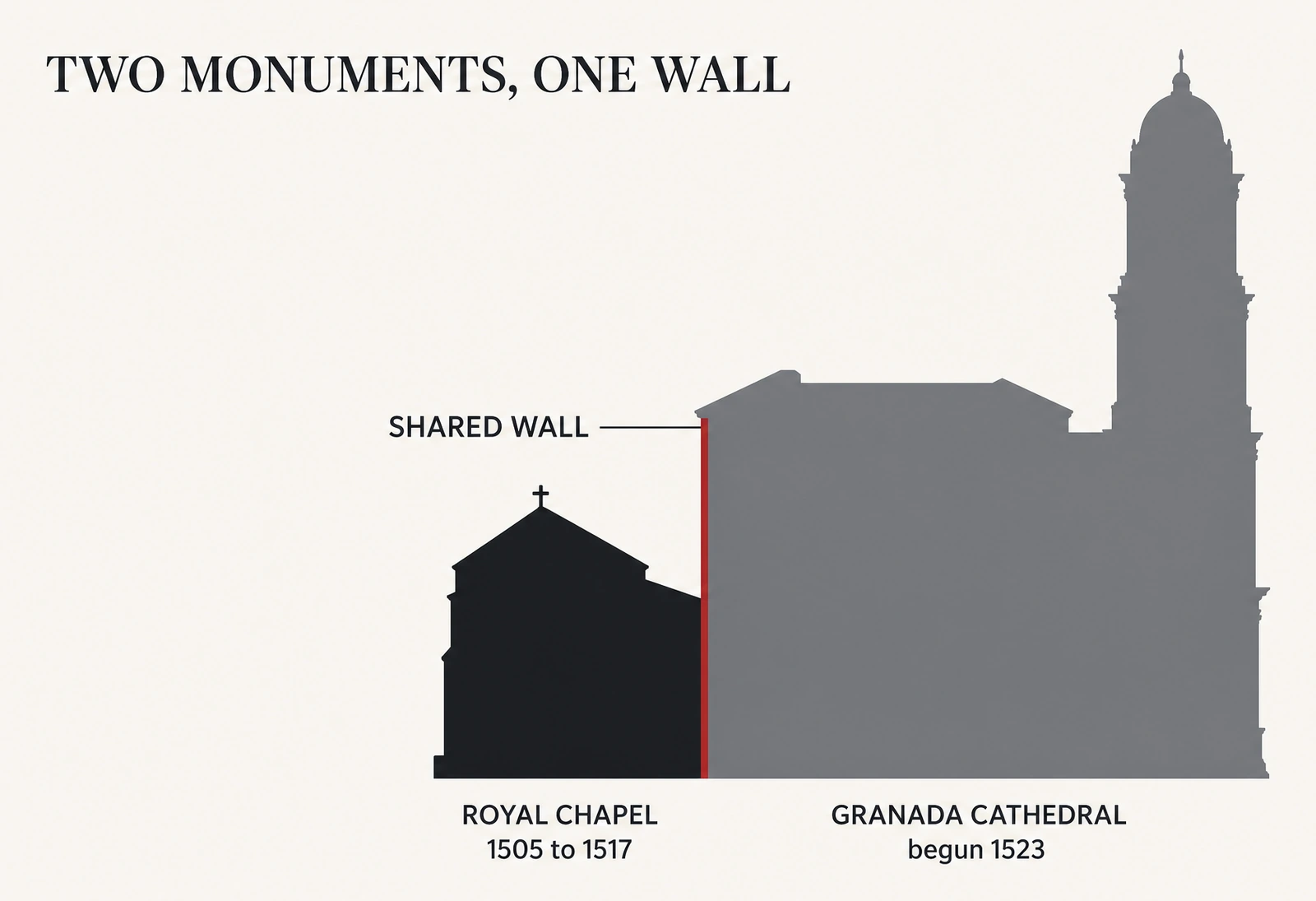
See the difference between them, what is inside the Chapel, and who chose to be buried there and why.
Isabella insisted on Granada in 1504. Her grandson Charles made it real in 1521. Five hundred years later, they still share the same wall.
What each era left you to look at
The useful thing about the dates above is that almost all of them are still standing. Three of them are the reason the visit takes as long as it does.
The Gothic shell
Egas’ building itself — the vault, the transept, the short stair down to the crypt. Built to hold two people and later asked to hold a queue.
Read more ›From 1521The five lead coffins
What Charles V had carried down the hill. Plain lead, an initial on each lid, on a bare stone floor beneath all that marble.
Read more ›1523 onwardsThe Cathedral next door
Begun Gothic, finished Renaissance, and big enough to make the Chapel look like an afterthought. Separate building, separate ticket.
Read more ›Hearing this story in the building itself
None of the above is written on a label inside the Chapel. The rooms are largely unsignposted, photography is prohibited, and the objects are left to speak for themselves — which they do not, unless somebody tells you what you are looking at. These are the tours that cover the Cathedral as well, because the two buildings only make sense together.
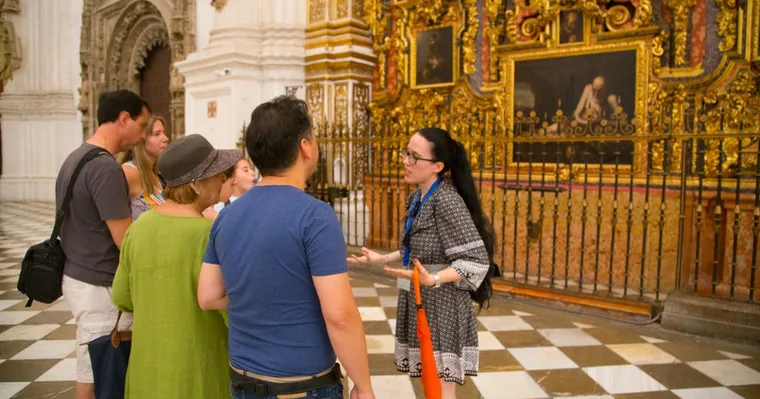 Best reviewed
Granada: 3-Hour Cathedral and Royal Chapel Tour
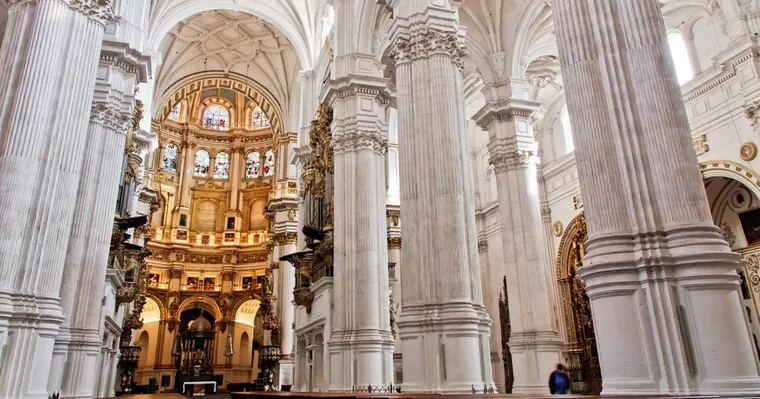 Guided in Spanish
Granada: Catedral y Capilla Real
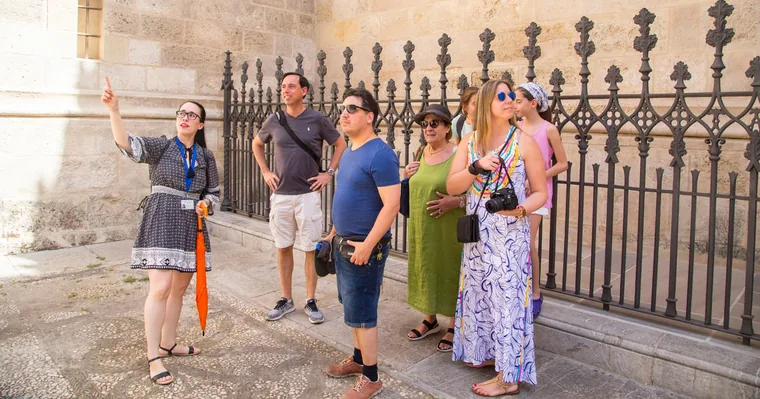 Lowest price
Granada: Royal Chapel and Historical Center Walking Tour
Can’t make these dates?
Browse more available Royal Chapel of Granada tours and find one that fits your schedule — all with instant confirmation and free cancellation.
Frequently asked questions
Why did Isabella choose Granada for her burial?
The Reconquest had just ended in 1492. Granada was the Nasrids’ final stronghold. She wanted to be buried in the proof of victory, not in Castile.
When was the Royal Chapel built?
Between 1505 and 1517, under the architect Enrique Egas, in Gothic. Domenico Fancelli’s marble cenotaph was completed in the same year the building was, 1517, and Master Bartolomé de Jaén’s reja followed in 1520.
Who is Charles V and why does he matter?
Isabella and Ferdinand’s grandson, who inherited Spain and the Habsburgs’ vast territories. He is the one who ended the seventeen-year wait: on 10 November 1521 he had both monarchs’ remains carried down from the Alhambra convent into the crypt. He also had the Cathedral begun next door two years later.
When was the Cathedral built?
Begun in 1523, alongside the finished Chapel, to a Gothic design by Enrique Egas. Diego Siloé took the project over around 1528 and redesigned it as a Renaissance building, which is the one that got built. It shares a wall with the Chapel but is a separate monument with a separate ticket.
Are the Chapel and Cathedral the same building?
No. Two separate monuments, two separate tickets, two entrances. But they share a wall and were designed as an ensemble. Many tourists confuse them. See the full explanation.
Five hundred years, one wall apart
The Chapel is €7 at the door and takes well under an hour. A guided visit takes in the Cathedral next door and the reasons both buildings are standing where they are.